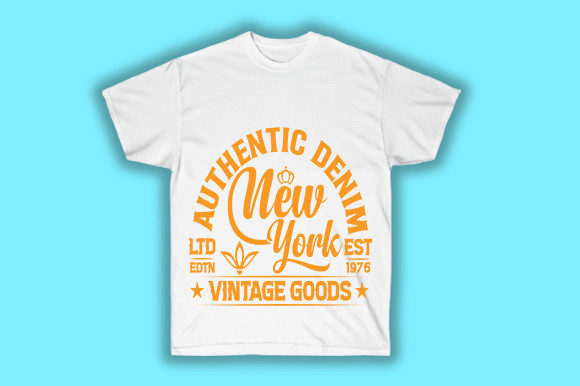
Reviewing Authentic Denim New York Vintage Goods
When I first pulled up Authentic Denim New York Vintage Goods on my screen, I was not looking for just another generic graphic. As a designer who spends half my life digitizing and the other half stitching, I look for assets that bridge the gap between digital crispness and textile reality. This piece caught my eye immediately because it carries a specific mood: urban, rugged, and timeless. It does not scream for attention with neon colors or chaotic lines. Instead, it relies on strong structural shapes and a vintage aesthetic that feels earned rather than forced.
For embroidery designers, small business owners, and Etsy sellers, the difference between a design that sells and one that sits in a folder is often about versatility and stitchability. I evaluated this asset not just as a static image, but as a potential machine embroidery design ready for real-world application. Here is my practical breakdown of how it performs, where it shines, and what you need to watch out for before you hit start on your machine.
First Impressions and Visual Personality
The immediate vibe of Authentic Denim New York Vintage Goods is industrial chic. It fits perfectly into the current trend of heritage branding and retro apparel. The layout is balanced, with a density that suggests durability. For those of us creating T-Shirt Designs or Graphics for print-on-demand, the vector nature is a huge plus. The description notes it is made with 100 resizable vector shapes and is fully editable in EPS 10 and SVG formats. This means you are not stuck with a rigid bitmap. You can tweak curves, adjust spacing, or change colors to match a client’s brand palette without losing quality.
However, my mind always jumps to the needle. How will these vector shapes translate to thread? The bold lines suggest that this design would handle satin stitch borders beautifully, while the larger filled areas could be managed with a well-balanced fill stitch pattern. It does not look like it requires excessive stitch density, which is good news for fabric stability. The visual personality is confident, making it ideal for projects that need to convey quality and authenticity.
Real-World Application: The Tote Bag Test
To test its viability, I imagined a common scenario for many crafters: a custom order for a boutique coffee shop. They wanted branded tote bag designs that felt substantial, not flimsy. I visualized Authentic Denim New York Vintage Goods stitched onto a heavy canvas tote in a deep navy or charcoal thread. The result would be striking. The vintage aesthetic complements the natural texture of canvas, and the bold shapes ensure the logo remains legible from a distance.
This same logic applies to sweatshirt embroidery. A crewneck sweatshirt in heather gray with this design stitched on the left chest or across the back would appeal to customers looking for custom apparel that feels high-end. It is not just a logo; it is a statement piece. For Etsy sellers and small shop product creators, this kind of versatility is gold. You can offer it on multiple items without needing to redesign the core asset.
Navigating Fabric and Hoop Constraints
While the design is robust, it is not without its challenges. Embroidery is a tactile medium, and fabric choice dictates success. If you are planning to use this on thin or stretchy fabrics, proceed with caution. The bold shapes require a stable foundation. I strongly recommend using a cut-away stabilizer for knit fabrics like t-shirts or baby clothes to prevent puckering. For woven fabrics like denim or canvas, a tear-away stabilizer might suffice, but always test on scrap fabric first.
Hoop size is another critical factor. Since the design is vector-based and resizable, you might be tempted to shrink it down for a small embroidered patch or a hat brim. Be careful. If you reduce it too much, the details may merge, and the running stitch elements could become indistinguishable. I advise keeping the design at a medium to large scale to maintain its integrity. For curved surfaces like caps, ensure the design is centered and properly hooped to avoid distortion during stitching.
Commercial Viability and Customer Trust
From a business perspective, Authentic Denim New York Vintage Goods adds value to your handmade product lineup. Customers associate clean, well-executed embroidery with professionalism. When they see a crisp, dense stitch pattern that holds its shape after washing, their trust in your brand increases. This design supports that perception. It looks intentional and crafted, not slapped on.
For commercial embroidery projects, such as corporate gifts or team uniforms, the ability to modify colors is essential. You can easily adapt the vector file to match company branding before converting it into an embroidery file. This flexibility saves time and reduces the need for multiple digitized versions. Just remember to check the licensing terms. While the product description highlights editability, always confirm whether the license covers commercial sales of finished items or if it is limited to personal use.
Practical Designer Notes
Before you commit to a full production run, keep these practical tips in mind:
- Test on Scrap Fabric: Always stitch a sample on the actual material you plan to use. Check for puckering, thread breaks, or registration issues.
- Contrast Matters: Review how the design looks in black and white mockups. High contrast ensures visibility on dark or light backgrounds.
- Thread Color Selection: Choose thread colors that complement the vintage aesthetic. Earth tones, muted blues, and grays often work better than bright primaries for this style.
- Check Stitch Density: If you are digitizing this yourself from the vector file, pay attention to stitch count. Too dense, and you risk perforating the fabric; too sparse, and the backing shows through.
- Verify Licensing: Confirm if the license allows for selling finished products like personalized gifts or holiday embroidery items. Do not assume commercial rights are included unless explicitly stated.
Final Verdict
Authentic Denim New York Vintage Goods is a strong contender for designers who value flexibility and classic aesthetics. It is not just a pretty picture; it is a functional asset that translates well to various embroidery projects. Whether you are creating baby embroidery for a nursery gift or branding apparel decorators merchandise, this design offers the structural integrity needed for professional results. Just respect the fabric, choose your stabilizer wisely, and let the vintage charm do the rest. It is a reliable tool in the kit of any serious creative entrepreneur or maker looking to elevate their finished product quality.